Guides
Complete Guide to SMS Compliance: Best Practices for TCPA & Text Marketing
Discover the best practices of SMS compliance with our comprehensive guide on TCPA regulations.
Luthor Team··13 min read
Article details
- Written by
- Luthor Team
- Topic
- Guides
- Published
- Nov 3, 2025
- Last updated
- Nov 3, 2025
- Reviewed by
- Luthor Team
Reviewed Nov 3, 2025 for source quality, practical relevance, and regulated-marketing context.
80% of businesses now leverage SMS marketing to reach customers – that's nearly a 45% increase in just two years. And it's working: 79% of consumers have willingly opted in to receive business texts, an 11% jump from last year.
But there's a dark side to this texting boom. Americans were bombarded with 225 billion robotexts in 2022 – a 307% explosion since 2020. So regulators weren’t standing idle and watching – the FCC introduced tough new rules in late 2023 targeting illegal texts, closing loopholes and empowering carriers to block suspicious messages.
So while SMS marketing is more powerful than ever, the compliance landscape is a minefield. One wrong step with TCPA regulations could cost your business millions. Let's dive into how you can harness the power of SMS while keeping your company protected.
How Can You Ensure SMS Compliance?

Even in the heavily regulated finance sector, only 47% of firms allowed employees to use text messaging for business in 2023, though this jumped to 66% by 2024 as companies implemented proper compliance measures. This shows many businesses held back due to legitimate compliance concerns.
And they had good reason: TCPA lawsuits in early 2023 were up 79% compared to the prior year, and financial institutions paid over $2 billion in fines in 2022-2023 for employees' off-channel texts that violated recordkeeping rules.
Ensuring SMS compliance means implementing strict consent practices, monitoring all communications, and following industry guidelines meticulously. Companies that do so can use texting safely and effectively, while those that don't face escalating legal and financial risks that could potentially sink their business.
What Are the Key SMS Compliance Guidelines?
The core guidelines for SMS marketing compliance center on obtaining consent and following communication rules set by law and industry bodies. TCPA regulations (as updated through 2023) require businesses to secure "prior express written consent" from consumers before sending automated marketing texts.
This consent must be clear and unambiguous – recent FCC rulemaking in December 2023 even tightened this to require consent be specific to one particular seller (closing the "lead generator" loophole that had allowed one consent to cover multiple marketers). The FCC also clarified that the National Do-Not-Call Registry protections now explicitly apply to text messages as well.
In addition to TCPA, the wireless industry's CTIA guidelines set best practices for text campaigns. While not laws, these guidelines are enforced by carriers. The CTIA's messaging principles call for businesses to clearly disclose program terms and obtain opt-in from users, include notices that "Msg & Data rates may apply," and support universal STOP/HELP commands for opt-out and help requests.
All application-to-person messaging campaigns using 10-digit numbers or short codes must be registered and vetted with carriers to ensure compliance. Following CTIA rules is essential – carriers reserve the right to shut down or block messaging programs that generate high complaint rates or violate these best practices.
Beyond TCPA and CTIA, companies should be aware of other applicable laws. For example, debt collection texts must comply with CFPB rules (Regulation F) which mandate including opt-out instructions in each message. Various states have enacted "mini-TCPA" laws with their own consent requirements and penalties.
In summary, as of 2024-2025, the key guidelines are: get explicit consent in writing, honor do-not-call/text requests, follow carrier requirements for disclosure and opt-outs, and stay updated on new rules at both federal and state levels.
Steps to Ensure Compliance with TCPA and CTIA
Achieving SMS compliance requires a proactive, multi-step approach. First and foremost is implementing a robust consent capture process: businesses should obtain opt-in through a clear mechanism (a web form or keyword text-in) that records the consumer's agreement to receive texts. Many organizations now use a double opt-in (sending a confirmation text that the user must reply "YES" to) to verify consent.
Next, every outgoing campaign should be configured to include compliance elements – messages must identify the business, include required disclosures (like potential carrier charges), and provide an easy opt-out instruction (e.g. "Reply STOP to unsubscribe"). It's critical to have a system in place to immediately honor opt-outs and update your contact lists accordingly.
Another key step is maintaining records of consent and communications. Businesses implement compliance platforms that log when and how each subscriber gave consent, which messages were sent, and when opt-outs occurred – this audit trail can be a lifesaver in the event of an investigation or lawsuit. Many companies in highly regulated industries have also started training employees and using approved texting systems. In finance, for example, firms now often require all client texting to occur on monitored apps that archive messages, thus staying compliant with both TCPA and SEC/FINRA rules.
A real-world example is the response of sports franchises after a high-profile TCPA case: when the Tampa Bay Lightning hockey team paid $2.25 million to settle a class action over unsolicited texts, it spurred sports teams and other businesses to adopt stricter opt-in practices and auditing of text campaigns.
In short, ensuring compliance means baking it into your processes: from sign-up (consent) to messaging (content & frequency) to opt-out handling and recordkeeping. Businesses that have done so – using double opt-ins, compliant messaging templates, and regular compliance reviews and audits – have successfully run SMS campaigns without regulatory issues.
Understanding SMS Compliance Laws and Regulations
Several major laws and regulators govern text message communications. The cornerstone is the Telephone Consumer Protection Act (TCPA), enforced by the Federal Communications Commission (FCC). The TCPA makes it unlawful to send text messages (considered a type of "call" by the FCC) using an autodialer or prerecorded content to a cell phone without the recipient's prior consent.
In 2023, the FCC issued significant updates to TCPA rules: it amended its regulations to require one-to-one consent (one consumer's consent can't be "bundled" for multiple sellers) and extended Do-Not-Call provisions to text messages. These changes greatly affect lead generation and telemarketing industries, effectively outlawing the old practice of a single opt-in covering an entire list sold to many companies.
Key regulators include the FCC, which handles TCPA rulemaking and can bring enforcement actions (including fines) against violators. The Federal Trade Commission (FTC) also plays a role, primarily through the Telemarketing Sales Rule and oversight of the National Do Not Call Registry. The Consumer Financial Protection Bureau (CFPB) oversees communications in financial services; for instance, the CFPB's debt collection rule explicitly covers text and requires opt-out language in every debt collection text.
Additionally, state attorneys general are increasingly active – many states have their own telemarketing laws that treat unauthorized texts as violations, and state regulators (or private plaintiffs under state laws) can pursue penalties.
Industry self-regulation also fills gaps – the CTIA (Cellular Telecommunications and Internet Association) issues best practice guidelines which, while not law, function as quasi-regulatory standards because mobile carriers enforce them.
What Are the Text Message Compliance Requirements?
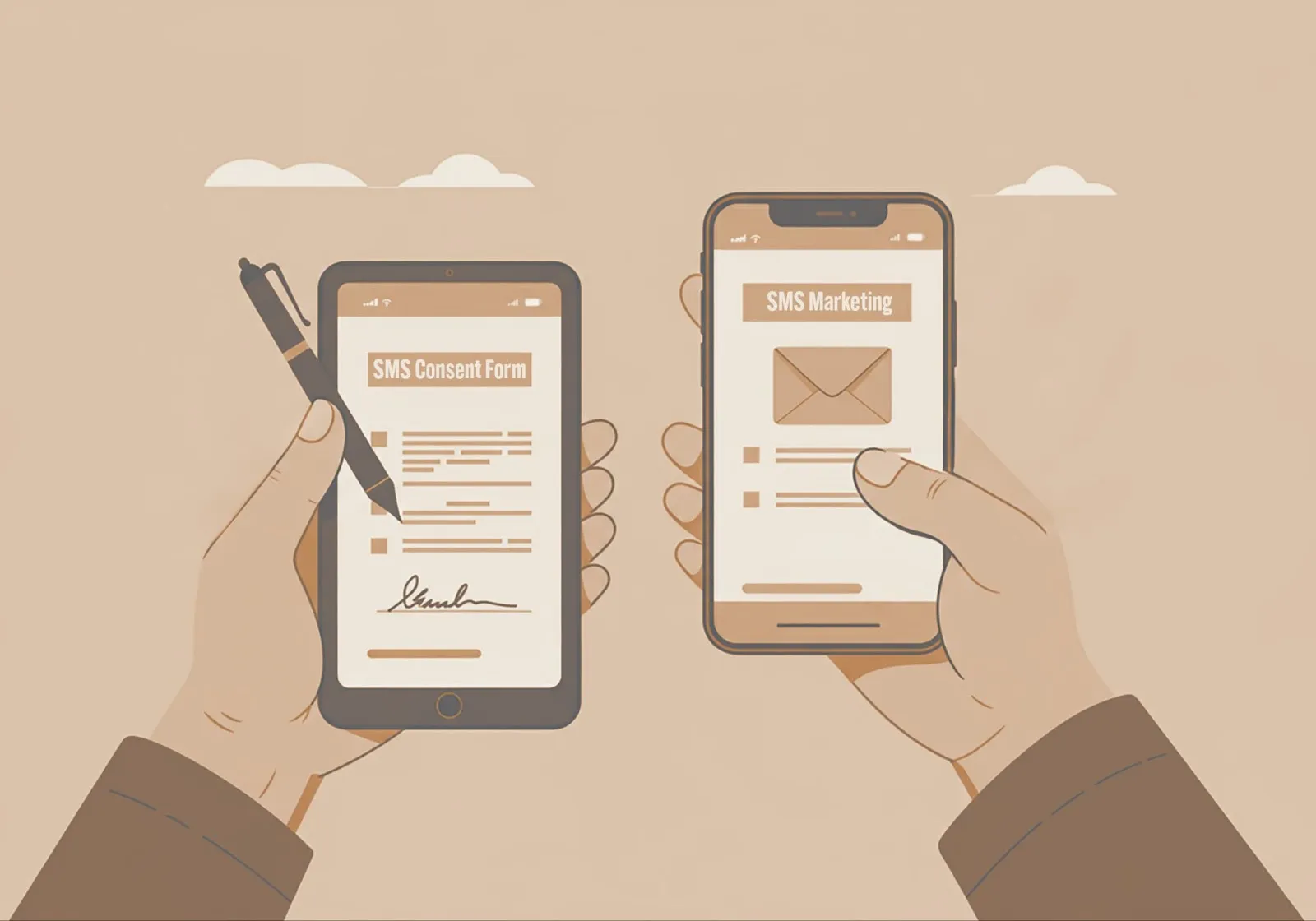
While the exact language of regulations can be complex, the core compliance requirements for text messaging can be distilled into a few key mandates:
- Obtain Prior Consent: You must have consent before sending marketing texts. For promotional or marketing messages, TCPA requires express written consent from the recipient. This means the person gave permission, via a signed form or electronic agreement (e.g. checking an unchecked box on a web form and submitting), to receive texts from your business. No cold texting of prospects is allowed.
- Identification and Disclosure: When obtaining consent, disclose what the person is signing up for – e.g. the type of messages and frequency. At the time of opt-in (on a website or paper form), and often in the first welcome message, you should identify your business, explain the program (e.g. "ABC Bank Alerts: 4 msgs/month"), and note any applicable terms. It's standard to include "Msg&Data rates may apply" to inform the subscriber that their carrier might charge SMS fees.
- Opt-Out Mechanism: Every marketing text campaign must allow recipients to opt out easily , typically by replying "STOP." Under both CTIA guidelines and FCC rules, if a consumer texts "STOP" (or a reasonable variant) to your message, you must cease texting them for that campaign. It's best practice (and effectively required) that your messages themselves mention this: e.g. "Reply STOP to unsubscribe." According to regulators, companies should process these opt-out requests promptly – the FCC's new rules (effective 2024) mandate honoring any opt-out within no more than 10 business days (shorter than the previously allowed 30 days).
- No Texting DNC or Revoked Numbers: If a number is on the National Do Not Call Registry or if the person has previously revoked consent, you cannot send marketing texts to that number. The recent FCC order explicitly codified that Do Not Call rules apply to texts. The FCC has clarified that consumers can revoke consent through any reasonable method – even if they don't text "STOP" exactly, any clear request to stop messages must be honored.
- Recordkeeping: It is highly recommended to keep logs of consent and messaging. In a TCPA lawsuit, the burden is on the sender to prove consent. That means you should maintain records of how/when each number opted in (e.g. consent form timestamp, IP address, or text log of an opt-in message).
Failure to meet these requirements can lead to serious consequences. TCPA violations carry statutory damages of $500 per text (or call) and up to $1,500 per text for willful violations, with no maximum cap on total liability. It's easy to see how not following the rules – say blasting 1,000 people without consent – could snowball into millions of dollars in penalties. Regulators and plaintiffs are actively enforcing these rules: the FCC reports tens of thousands of consumer complaints about unwanted texts annually and has shown willingness to levy huge fines (e.g. a record $300 million fine in 2023 against a scam robocall operation).
Role of Express Written Consent in Text Message Marketing

Express written consent is the bedrock of lawful SMS marketing. Under the TCPA, any promotional text to a cell phone using an autodialer (which most text platforms are) requires the recipient's prior express written consent. This means the person knowingly agreed in writing (physical or electronic form) to receive your texts. The importance of this consent cannot be overstated – it's essentially your "safe harbor" against TCPA liability.
Fortunately, consumers who want to hear from businesses are generally willing to give consent when asked properly. Recent data shows the majority of consumers are opting in to text programs. By 2024, 79% of consumers had opted in to receive texts from at least one business, up from around 71% a year before. This growth indicates that if you provide a clear value proposition (discounts, alerts, etc.) and an easy opt-in process, customers are open to signing up.
Certain demographics even prefer text: 47% of U.S. millennials say they favor brand communications via text message over other channels. Overall, around 75% of consumers now prefer to receive promotional content via SMS rather than email or other methods, which is a strong endorsement of the channel – but only when it's consensual.
Express consent isn't just a legal checkbox; it has marketing benefits too. When a customer gives you permission to text them, they are effectively indicating a higher level of interest and trust. This is reflected in engagement metrics – for example, internal studies have found SMS opt-in campaigns often achieve 30-40% opt-in rates among targeted customers, and those who opt in are very responsive (one report noted 77% of SMS messages get a response within 10 minutes, far above email response rates).
By securing express written consent, you're assembling a list of people who want your messages. This leads to better click-through and conversion rates and fewer complaints. Indeed, companies that integrate SMS (with proper consent) into their marketing see significantly higher conversion – in one survey, 91% of businesses reported higher conversion rates when SMS was part of a coordinated campaign.
To summarize, express written consent is both a legal requirement and a marketing best practice. It ensures you're texting only those who want to hear from you, which protects you from TCPA lawsuits and yields a more engaged audience. The data suggests that when you ask consumers for permission, a large percentage will grant it – and that sets the stage for effective and compliant text communication.
Best Practices for Compliant SMS Campaigns

To run SMS campaigns that are effective and compliant, businesses should follow industry best practices that align with legal requirements:
- Obtain and Document Consent Proactively: Always start with a proper opt-in. Use a clear, conspicuous consent mechanism – for example, a web signup form with an unchecked box (that the user must check) agreeing to receive texts, or a text-in number where the user initiates the opt-in. Keep records (datestamp, IP, etc.) of that consent.
- Use a Confirmed Opt-In (Double Opt-In) When Possible: While not legally mandated in the US, double opt-in is considered a gold standard. This means after someone signs up, you send a confirmation text asking them to reply "YES" to verify. Only upon that confirmation do you start messaging.
- Disclose Message Purpose and Frequency Up Front: When users opt in, let them know what content to expect (e.g., "Sign up to get weekly offers and updates") and approximately how often. Then stick to that plan.
- Always Include a Way to Opt Out and Get Help: Every campaign message should either include or have recently included instructions like "Txt STOP to opt out, HELP for help." This isn't just compliance – it's courtesy.
- Send Messages at Appropriate Times: As a guideline, stick to daytime and early evening hours for promotional texts, roughly 8 am to 9 pm local time of the recipient (mirroring call rules).
- Use a Recognizable Sender ID: If using a short code or alphanumeric sender, ensure it's one that is known or clearly associated with your brand (and you've registered it with the appropriate authorities).
- Keep Content Compliant and User-Focused: Don't include prohibited content (illegal offers, misleading info). If you're in a regulated industry (finance, healthcare), be mindful of additional content rules.
- Maintain an Internal Do-Not-SMS List: Beyond the national DNC, keep your own list of anyone who opted out or who complained, and make sure no future campaigns accidentally include them.
- Monitor Campaign Performance and Complaints: Watch metrics like opt-out rates and spam complaint rates. If an SMS campaign yields an unusually high opt-out or complaint rate, pause and evaluate what went wrong.
- Train Your Team and Align Departments: Ensure marketing, legal, and IT are on the same page about compliance. Having a compliance checklist and making it part of campaign planning is a best practice many large companies use.
Following these best practices not only keeps you within the law but also improves the effectiveness of your SMS marketing. For instance, messages sent during appropriate times with proper personalization tend to get better engagement. A case study often cited is a retail brand that moved from indiscriminate texting to a fully compliant program: they started requiring double opt-in, trimmed their list to only engaged subscribers, and added clear "STOP to end" notes – the result was fewer sends overall but a 683% higher likelihood of marketing success since the remaining audience was highly receptive.
Why Is TCPA Compliance Essential for SMS Marketing?

Non-compliance with the TCPA can be devastating to a business – both financially and reputationally. The law has teeth in the form of heavy penalties and legal liability. Each unwanted text can cost $500 in statutory damages (or up to $1,500 if willfully violating). While $500 might not sound too bad, that is per message, per recipient. A single marketing blast to 1,000 people who didn't consent could, in theory, open up exposure of $500,000 (and triple that if deemed willful).
Unlike some laws, the TCPA allows class action lawsuits and doesn't cap total damages, so companies have faced massive payouts. One analysis found the average TCPA class action settlement is $6.6 million. There have been numerous settlements well above that: e.g., Capital One famously paid $75 million in 2014 to settle TCPA claims related to calls/texts, and more recently a real estate brokerage (Keller Williams) agreed to a $40 million settlement in 2023 for telemarketing calls that violated TCPA.
Beyond private lawsuits, regulatory fines can stack up. The FCC can levy penalties for willful violations of the TCPA or related rules. We have seen the FCC go after rogue texting operations – for example, in December 2023 the FCC's Enforcement Bureau gained authority to "red flag" and require carriers to block certain text senders. The FCC has explicitly noted that robotext complaints are soaring and that it will use all tools available to curb illegal texting.
For businesses, the financial hit from TCPA non-compliance can include: litigation costs (even if you win a case, you may spend hundreds of thousands in defense), settlements or judgments (millions), FCC/FTC fines (which could also reach millions), and the cost of public relations damage control. Many insurers exclude TCPA violations from coverage, meaning companies often pay these costs out of pocket.
Let's consider examples in the financial sector: Banks and fintech companies rely on customer trust, but there have been cases of these institutions being hit with TCPA class actions for texting. Bank of America, for instance, paid a $32 million settlement in 2014 resolving claims it sent unauthorized automated texts/calls to customers. A credit union in 2022 settled for $1.75M over fraud alert texts that plaintiffs said were marketing in disguise. These are not trivial sums for "minor" texting missteps.
On the positive side, TCPA compliance is essential for maintaining customer goodwill and maximizing the effectiveness of SMS as a channel. Consumers are much more responsive to texts they actually consented to. If you abuse the channel, not only might you face lawsuits, you'll also likely see high opt-out rates and angry recipients. In contrast, a company that respects opt-ins and opt-outs builds a better brand image. One marketing study noted that campaigns following best practices saw significantly higher ROI; SMS can yield an estimated $21–$41 return per $1 spent on average, but that assumes the messages reach engaged, willing customers – which is only possible when compliance has been followed to gain those willing customers.
All in all,TCPA compliance is essential because it protects your business from financial penalties, shields your brand from being seen as a spammer, and ensures you can actually reach customers (since carriers may block non-compliant traffic). Given how lucrative SMS marketing can be when done right, adhering to the law is simply a wise investment – it's far cheaper to build compliance into your SMS program than to face a multimillion-dollar lawsuit or fine later.
Final Thoughts: Making Compliance Work For You, Not Against You
Text messages get opened around 98% of the time. That's quite incredible compared to email, which we're all drowning in. And consumers are actually ok with getting texts from businesses – as long as they've given permission first. These simple courtesies build trust, and trust builds business.
We created Luthor because we saw too many companies struggling with compliance – either playing it too safe and missing opportunities, or taking risks that could cost them millions. Our AI platform takes the stress out of reviewing your marketing assets for compliance issues. We help you reduce risk without reducing results.
Want to stop worrying about SMS compliance and get back to what you do best? Give our demo a try and see how much easier life gets when you have smart compliance tools working for you.
Keep reading
Related resources

Guides
The Meaning of Compliance and an Era of Change for Banks, RIAs, and Fintechs
Learn the meaning of regulatory and corporate compliance and its impact on the operations of banks, RIAs, and fintechs.
15 min

Guides
Guide to the Regulatory Agencies in the U.S. Financial Industry
Discover the 20 major regulatory agencies that rule financial industry & learn how they impact banks, RIAs, and fintechs
18 min

Guides
What Is a Compliance Checklist? And How Can Banks, RIAs, and Fintechs Create One?
Discover what a compliance checklist is and how to create one to streamline AML/KYC and consumer protection.
7 min



Never publish risk again.
Our policy and legal engineers will walk through your content workflows and regulatory obligations, then integrate Luthor in days, not months.