Guides
Comparative Advertising: FTC Rules, Examples, and Compliance Checklist
A practical guide to comparative advertising law, FTC truth-in-advertising rules, substantiation, disclosures, competitor challenges, and review workflows.
Luthor Team··Updated ·13 min read
Article details
- Written by
- Luthor Team
- Topic
- Guides
- Published
- Jan 7, 2026
- Last updated
- Jun 20, 2026
- Reviewed by
- Luthor Team
Reviewed Jun 20, 2026 for source quality, practical relevance, and regulated-marketing context.
Updated June 20, 2026. This guide has been refreshed with current FTC civil penalty context, clearer guidance on substantiating price, performance, AI, "best," and "#1" claims, real-world comparative advertising examples, and a more practical review workflow for disclosures, competitor screenshots, paid social crops, and claims that can become stale after launch.
Comparative advertising can be one of the fastest ways to make a buyer understand why your product is different.
It can also be one of the fastest ways to create a compliance problem.
When a campaign says your product is faster, cheaper, more accurate, safer, easier, better rated, more complete, or more trusted than a competitor, the claim stops being ordinary positioning. It becomes a comparative claim that needs evidence. The FTC does not ban truthful comparisons. In fact, its long-standing comparative advertising policy says truthful comparative advertising can give consumers useful information and encourage competition. But the same policy requires clarity and, when needed, disclosure to avoid misleading consumers.
This guide explains how to use comparative advertising without turning a strong campaign into a legal or regulatory issue.
What Is Comparative Advertising?
Comparative advertising is advertising that compares one brand, product, service, plan, price, feature, performance result, or outcome against another. The comparison can be direct, such as naming the competitor. It can also be indirect, such as saying "faster than the leading provider" or showing a competitor's recognizable product, interface, packaging, or category position.
The FTC's policy statement defines comparative advertising as advertising that compares alternative brands on objectively measurable attributes or price and identifies the other brand by name, illustration, or other distinctive information. That framing is important. Comparative advertising works best when it is tied to something consumers can actually evaluate: price, speed, coverage, ingredients, contract terms, feature availability, accuracy, uptime, fees, or measurable performance.
The risk rises when the comparison becomes vague. "Better than Brand X" is much harder to defend than "completed the same workflow 32% faster than Brand X in our May 2026 test using the same dataset." Specific claims are easier to substantiate, easier for consumers to understand, and easier for compliance teams to approve.
The FTC's Rule: Truthful, Clear, and Substantiated
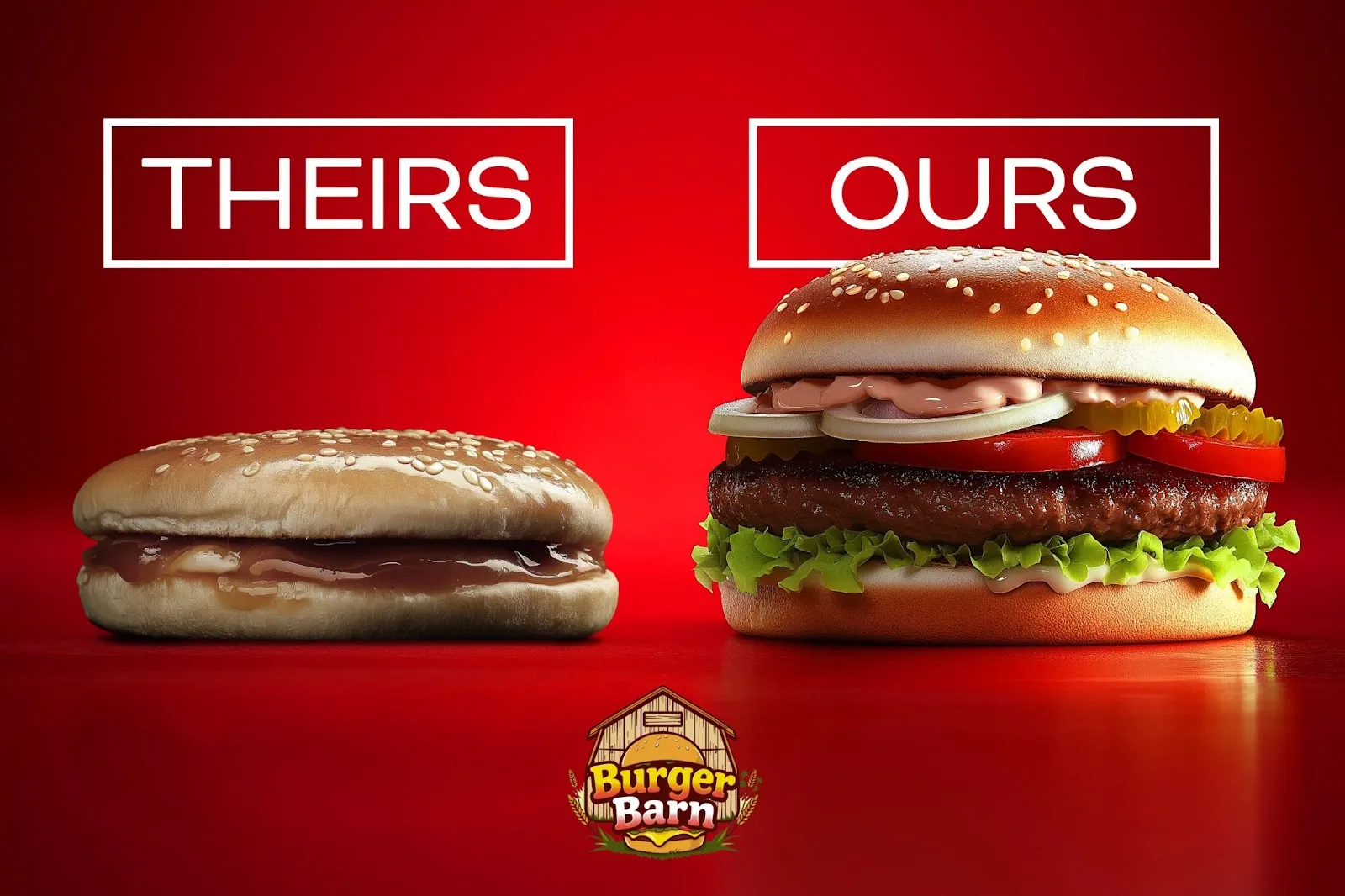
The FTC's baseline advertising standard is simple: ads must be truthful, not misleading, and supported by evidence. The FTC's advertising guidance says marketing claims must be truthful, cannot be deceptive or unfair, and must be evidence-based.
For comparative advertising, that standard applies to both what the ad says directly and what it implies. A side-by-side chart can imply a competitor lacks a feature. A price claim can imply the plans are equivalent. A screenshot can imply the competitor still looks or works that way today. A "best" claim can imply objective market leadership rather than opinion.
The FTC's comparative advertising policy adds two practical requirements: the basis of comparison should be clearly identified, and disclosures should be used when needed to avoid deception. Put differently, do not make consumers reverse-engineer what you are comparing.
If your claim depends on a condition, say so close to the claim. If the comparison is based on a specific plan, test, timeframe, geography, customer segment, or methodology, make that visible enough for a reasonable consumer to understand.
The penalty context is also more current now. Under current eCFR text for 16 CFR 1.98, certain FTC Act civil penalties assessed after January 17, 2025 can reach $53,088 per violation. That does not mean every comparative ad issue produces that penalty, but it is a useful reminder that high-visibility claims should be reviewed before they reach buyers.
Substantiation Comes Before the Ad Runs
The most common mistake is building the ad first and looking for proof later.
That is backwards. Comparative claims should start with the evidence packet. The team should know the exact claim, the comparison set, the methodology, the date tested, the source data, the limitations, and the approved wording before design or paid media production starts.
| Claim type | What to substantiate | Common failure |
|---|---|---|
| Price comparison | Plans, fees, discounts, contract terms, billing period, and date checked. | Comparing your discounted annual price to a competitor's monthly list price. |
| Performance claim | Test method, sample size, environment, benchmark date, and reproducible results. | Saying "faster" based on one internal test with no documented methodology. |
| Feature comparison | Current competitor feature set, plan level, permissions, integrations, and limitations. | Claiming a competitor lacks a feature that was recently released. |
| Customer or rating claim | Source, sample, date, representativeness, and whether incentives affected reviews. | Saying "#1 rated" without identifying the rating source or category. |
| AI capability claim | What the AI does, where humans remain involved, test results, and limits. | Saying "automated compliance approval" when the workflow only assists reviewers. |
This is where Luthor can help. Comparative claims are easier to govern when the claim, evidence, reviewer decision, approved copy, and final creative stay attached to the same asset.
Disclosures Cannot Rescue a Misleading Headline
The FTC's small business advertising FAQ is clear that disclosures must be clear and conspicuous when needed to prevent deception. It also warns that fine print cannot contradict the main message or clean up a misleading impression.
That matters for comparative ads because many claims need context. "50% cheaper" may be true only for a specific plan and billing period. "More accurate" may be true only for a benchmark dataset. "Rated #1" may be true only in one review category or date range.
If that context is material, it belongs near the claim, in language normal buyers can understand. It should survive the actual channel where the ad runs: mobile landing pages, paid social crops, email previews, short-form video, comparison tables, and dark or light design variants.
A disclosure buried in a footnote, hidden behind a hover state, or placed below a long comparison table is usually not enough if the headline creates a broader impression.
The Lanham Act and Competitor Challenges

The FTC is not the only risk. Competitors can challenge comparative advertising too.
The Lanham Act gives businesses a path to sue competitors over false or misleading advertising. The FTC's small business FAQ explains that companies can sue competitors for deceptive ad claims. In practice, that means the competitor you name in an ad may become the first reviewer of your substantiation.
Not every dispute goes to court. Many national advertising disputes are handled through the National Advertising Division, or NAD, which reviews advertising claims and can recommend that claims be modified or discontinued. NAD is not the FTC, but ignoring a NAD process or refusing to comply can create escalation risk.
For marketing teams, the lesson is practical. Before a comparative campaign launches, assume the named competitor will ask three questions: What exactly are you claiming, what proof do you have, and is the comparison fair?
High-Risk Comparative Claims in 2026
Comparative claims are not all equal. Some are routine. Others deserve legal or compliance review every time.
Price and fee comparisons are high risk because the details matter. A lower price can depend on contract length, usage tiers, add-ons, implementation fees, promotional discounts, taxes, or support levels. If the products are not equivalent, the ad should say what is being compared.
Performance comparisons are high risk because buyers may treat them as objective proof. "Faster," "more accurate," "higher ROI," "less downtime," and "better detection" should be tied to a test method or source. If the result only applies to one workflow or customer profile, say that.
Superiority claims are high risk when they sound objective. "Best," "#1," "leading," "most trusted," and "most accurate" often require a defined basis. If the claim is puffery, keep it clearly subjective. If it sounds measurable, expect to substantiate it.
AI comparisons need extra care. Do not imply that AI can replace human review, guarantee compliance, or approve regulated content unless that is actually how the system works and you can prove it. For regulated marketing teams, AI claims should be reviewed alongside marketing claims compliance and advertising compliance checklist controls.
Competitor screenshots also need a review date. A screenshot from a competitor's product, pricing page, or documentation can go stale quickly. If the ad relies on it, record when it was captured and who verified it.
Examples: Strong vs. Risky Comparative Copy

Good comparative advertising is specific enough to be useful and narrow enough to be provable.
| Risky version | Better version |
|---|---|
| "We are faster than Competitor A." | "In our May 2026 benchmark, Luthor completed the reviewed workflow 42% faster than Competitor A using the same 200-asset test set." |
| "Half the cost of other platforms." | "Our professional plan is 48% less than Competitor B's public annual list price for the plan shown, checked June 2026. Implementation fees excluded." |
| "The only AI compliance platform marketers need." | "Luthor helps marketing teams pre-review regulated content, route human approvals, and retain audit evidence in one workflow." |
| "Competitor C does not support review evidence." | "Competitor C's public product page did not list approval evidence export as of June 2026." |
| "#1 compliance review platform." | "#1 by [named source/category/date], if that source actually supports the claim." |
The better versions are less flashy, but they are much easier to defend. They tell buyers what was compared and give compliance teams a record to review later.
A Review Workflow for Comparative Campaigns

A good comparative ad workflow should start before copywriting and continue after launch.
First, identify every comparative claim. This includes the obvious ones, like naming a competitor, and the implied ones, like using "leading provider," "legacy vendor," "traditional tool," or a recognizable screenshot.
Second, assemble the evidence packet. The packet should include source data, dates, screenshots, test methodology, owner, limitations, and approved wording. If the claim is based on competitor pricing or features, set an expiration or re-review date.
Third, route the claim to the right reviewer. Low-risk subjective positioning may be approved by marketing or brand. Objective superiority claims, regulated product claims, price comparisons, AI capability claims, and competitor-specific claims should go through compliance or legal.
Fourth, QA the final creative in the exact channels where it will run. Review desktop and mobile pages, paid social crops, short-form video, email previews, dark mode, translated versions, and any partner or affiliate versions.
Finally, monitor after launch. Comparative claims drift when competitor prices change, features ship, rankings update, or benchmarks age. A campaign that was accurate in January can become misleading by June.
Well-Known Lessons From Comparative Advertising
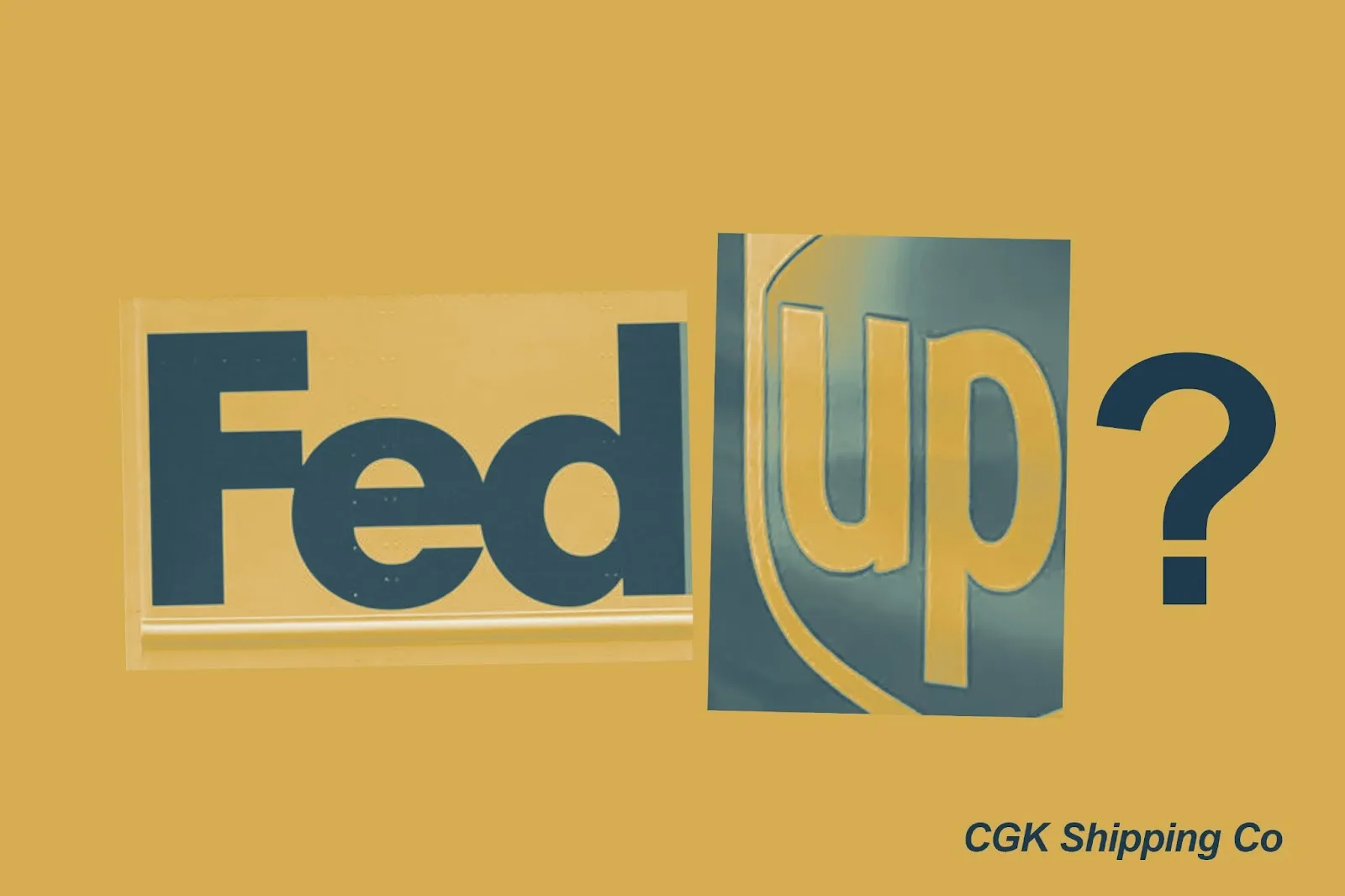
Comparative advertising has produced some memorable campaigns, but the useful lesson is not "be aggressive." The useful lesson is "be precise."
Apple's 2024 iPad Pro ad, commonly referred to as "Crush!", showed creative tools, instruments, books, and art supplies being crushed in a hydraulic press until only the new iPad remained. The intended message was that a thin tablet could contain many creative tools. A lot of viewers read it differently: as a large technology company showing physical creativity being destroyed. Apple apologized and reportedly pulled the ad from television.
Samsung's response, often described as "UnCrush", flipped the scene. Instead of crushing creative tools, the ad showed a musician picking up a damaged guitar and using a Galaxy Tab S9. The comparison worked because it was about brand posture and cultural timing, not a quantified claim that Samsung's tablet was faster, more accurate, or objectively better for artists. If Samsung had claimed "the best tablet for creators" or "more powerful than iPad Pro," the proof burden would have been much higher.
The Bang Energy and Monster dispute shows the other side of the risk. Bang's parent company, Vital Pharmaceuticals, sold energy drinks with an ingredient it called "Super Creatine" and promoted product benefits tied to that ingredient. Monster, a direct rival in the energy drink market, challenged those claims through litigation. Public summaries of the dispute report that Monster later received $293 million in false-advertising damages. The point is not that every bold beverage claim becomes a nine-figure case. The point is that a competitor with enough incentive may test whether the science, wording, and implied benefits actually hold up.
Recent enforcement and litigation examples show why marketing teams should separate "competitive posture" from objective claims:
| Example | Claim issue | Outcome | Compliance lesson |
|---|---|---|---|
| Bang Energy vs. Monster | Product-performance and ingredient-benefit claims around "Super Creatine." | Private litigation produced a reported $293 million false-advertising verdict for Monster. | Scientific and performance claims need evidence before launch, especially when a competitor can argue the claims affected market share. |
| Williams-Sonoma "Made in USA" claims | Origin claims implied products were made in the United States when regulators said they were imported or contained foreign parts. | The FTC and DOJ obtained a $3.175 million civil penalty, described as the largest "Made in USA" civil penalty at the time. | Origin, quality, and superiority claims are objective. Keep supplier evidence and qualify the claim when parts, processing, or assembly are mixed. |
| Benefytt health plan marketing | Marketing allegedly led consumers to believe limited-benefit products were comprehensive health insurance. | The FTC case page says proposed orders required $100 million in refunds and restrictions on future claims. | If a campaign compares your offer to a familiar regulated product category, make the limits obvious before the buyer acts. |
Not every row is a government "fine." Competitor lawsuits can create damages, FTC actions can create civil penalties or refunds, and NAD matters can lead to claim changes without a monetary penalty. For a marketing team, the operating lesson is the same: know whether the claim is subjective positioning, an objective comparison, or a regulated product-benefit claim before it goes live.
For most marketing teams, the decision is not whether comparative advertising is allowed. It is whether the claim is worth the proof burden.
How Luthor Helps Teams Review Comparative Claims
Comparative advertising should not rely on scattered screenshots and last-minute legal review.
Luthor helps marketing, compliance, and legal teams review comparative claims before they go live. Teams can intake campaigns, identify regulated or competitor-facing claims, attach substantiation, route approval, preserve reviewer decisions, and monitor approved content after publication.
That matters because comparative claims often become risky after the first approval. A competitor changes pricing. A screenshot becomes stale. A paid social crop loses a disclosure. A landing page owner edits a comparison table without re-review.
The goal is not to make marketing less competitive. It is to make competitive claims easier to approve, easier to explain, and easier to defend.
Sources and Further Reading
- FTC Statement of Policy Regarding Comparative Advertising
- FTC Advertising and Marketing Guidance
- FTC Advertising FAQ: A Guide for Small Business
- 16 CFR 1.98: FTC civil monetary penalty adjustments
- Apple apology coverage for the iPad Pro "Crush!" ad
- Samsung "UnCrush" comparative response coverage
- Bang Energy legal issues summary
- AP coverage of the Williams-Sonoma "Made in USA" civil penalty
- FTC Benefytt case page
- Luthor: FTC Advertising and Marketing Guidelines
- Luthor: Advertising Compliance Checklist
FAQ
Is comparative advertising legal in the United States?
Yes. Comparative advertising is generally legal in the United States when it is truthful, not misleading, and properly substantiated. The FTC's comparative advertising policy encourages truthful comparisons because they can help consumers make informed decisions.
What makes a comparative ad misleading?
A comparative ad can be misleading when it compares unlike products, leaves out material conditions, uses stale competitor information, implies an objective claim without proof, or uses disclosures that consumers are unlikely to notice or understand.
Do comparative claims need substantiation?
Yes. Objective comparative claims should be supported before the ad runs. The level of proof depends on the claim, but performance, price, health, safety, financial, and AI capability claims usually need stronger evidence than subjective brand positioning.
Can a competitor sue over comparative advertising?
Yes. Competitors may challenge false or misleading comparative claims through Lanham Act litigation or through self-regulatory channels such as NAD. A named competitor is often the first party likely to scrutinize the claim.
How should teams review comparative ads?
Start by identifying every explicit and implied comparative claim, attach evidence, document the comparison basis, review disclosures in the final channel, route high-risk claims to legal or compliance, and set a re-review date for claims that can become stale.
Keep reading
Related resources

Guides
FTC Advertising and Marketing Guidelines: Compliance from A to Z
Discover essential resources for FTC compliance, covering truth-in-advertising standards, influencer guidelines
14 min

Guides
Advertising Compliance Checklist for RIAs & FinTech
Our complete advertising compliance checklist helps you avoid fines. Covers SEC rules, FTC guidelines, disclosures, and more.
15 min

Guides
Marketing Claims Compliance: FTC Rules & Best Practices
Figure out marketing claims compliance and avoid penalties. Complete guide to FTC rules and legal requirements.
6 min



Never publish risk again.
Our policy and legal engineers will walk through your content workflows and regulatory obligations, then integrate Luthor in days, not months.