Guides
CCPA Compliance: Your Ultimate Guide to California Consumer Privacy
Ensure CCPA compliance with our comprehensive guide to the California Consumer Privacy Act.
Luthor Team··11 min read
Article details
- Written by
- Luthor Team
- Topic
- Guides
- Published
- Nov 3, 2025
- Last updated
- Nov 3, 2025
- Reviewed by
- Luthor Team
Reviewed Nov 3, 2025 for source quality, practical relevance, and regulated-marketing context.
Welcome to marketing in 2025, where privacy compliance isn't just a nice-to-have but rather a difference between successful campaigns and existential business threats.
We're not trying to scare you, but 94% of organizations believe customers will refuse to buy from them if they fail to protect personal data. And yet, a shocking 92% of companies were still not fully prepared to meet CCPA/CPRA requirements by the end of 2022, relying on ad-hoc manual processes instead of robust compliance programs.
Even more concerning? As of 2023, the California Attorney General can pursue CCPA violations without giving a 30-day cure period, meaning you get immediate fines for non-compliance. No warnings, no second chances, just penalties.
In this guide, we'll walk you through everything marketers and compliance teams need to know about CCPA compliance in 2025. Because nobody wants to be that company making headlines for a six-figure compliance fine.
What is the California Consumer Privacy Act?
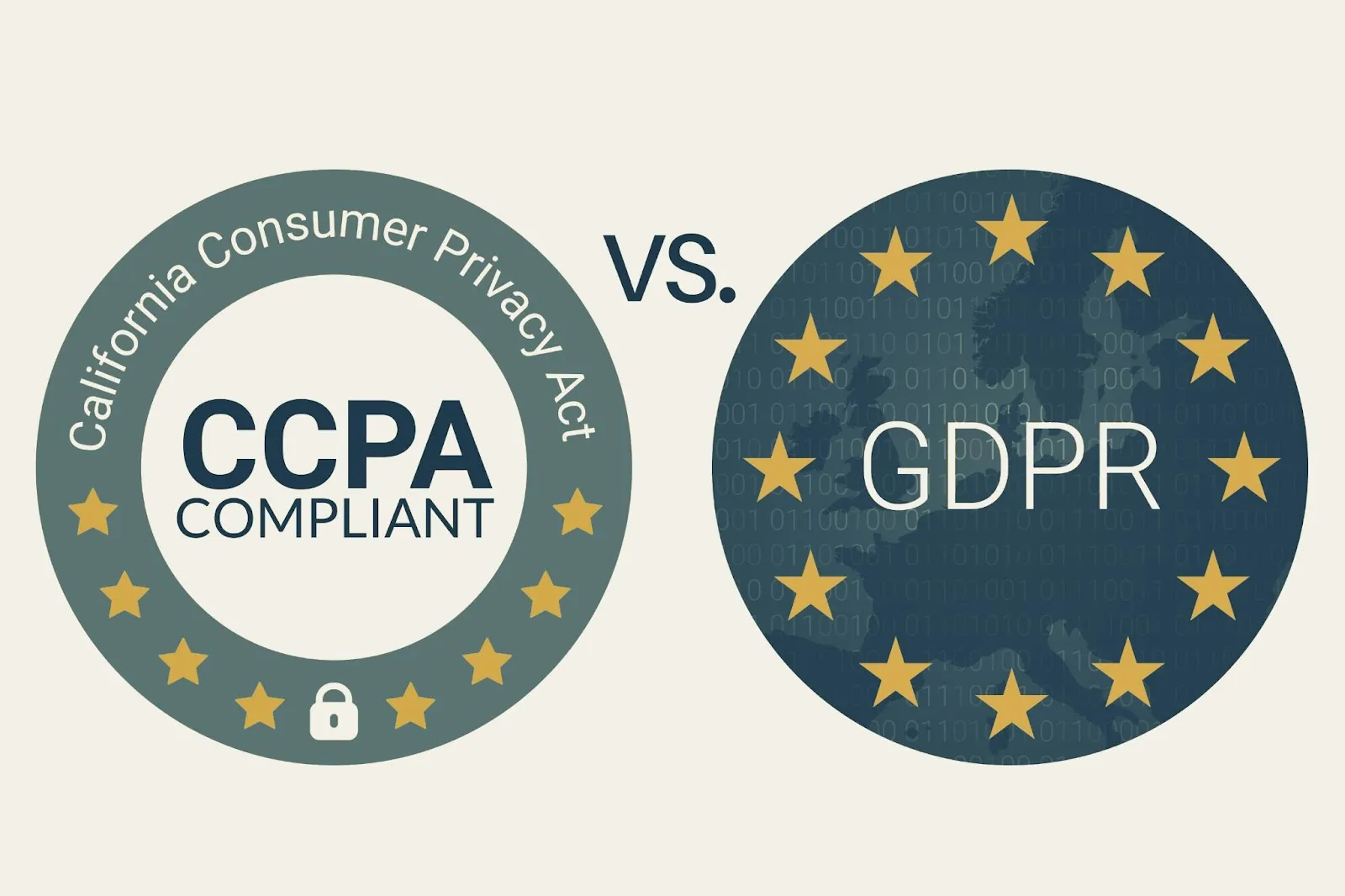
The California Consumer Privacy Act (CCPA) is a landmark state law that took effect in 2020, giving Californians unprecedented rights over their personal information and imposing strict obligations on businesses. At its core, the CCPA grants consumers the right to know what personal data is collected and how it's used, the right to delete that data, the right to opt out of its sale, and the right to non-discrimination for exercising privacy rights.
The impact on businesses has been sweeping. Roughly 500,000 U.S. businesses were initially expected to be affected, including many outside California that handle Californians' data. Companies have had to completely overhaul data-handling practices — updating privacy policies, adding "Do Not Sell My Info" links, building systems to respond to consumer requests, and strengthening data security.
And these changes didn't come cheap. An economic assessment by the state estimated initial compliance costs around $55 billion (about 1.8% of California's GDP), reflecting the massive operational changes required.
Who Must Comply with CCPA?
The CCPA applies to a wide range of companies, but it sets thresholds so that only certain businesses are covered. In general, any for-profit business that does business in California must comply if it meets one or more of these criteria:
- Annual gross revenues over $26,625,000 (updated in 2025 up from $25 million)
- Buy, sell, or share the personal information of 100,000 or more California residents or households
- Derive 50% or more of their annual revenue from selling California residents' personal information
Industry-wise, compliance tends to be heaviest in sectors dealing with lots of consumer data. Retail, technology, financial services, and media companies were among the first impacted, given their data-driven advertising models.
Notably, while certain data regulated by federal laws like GLBA (for banks) or HIPAA (for health providers) is exempt from CCPA, those entities must still protect any personal information outside those narrow exemptions. For example, a fintech company can't ignore CCPA just because it follows banking privacy rules; it still has to honor access or deletion requests from its California employees and consumers.
Steps to Become CCPA Compliant
Companies typically follow a structured roadmap to build CCPA compliance. A high-level step-by-step approach looks like this:
- Data Mapping and Inventory: Identify all personal information collected, used, shared, or sold by the business. This involves auditing databases, applications, and third-party recipients to catalog whose data you have, where it came from, and where it resides. Comprehensive inventory is foundational — you can't honor deletion or disclosure requests if you don't know what data you hold.
- Gap Analysis and Policy Updates: Compare current practices to CCPA requirements to find gaps. Is your privacy policy CCPA-compliant, listing all required information (categories of data collected, purposes, categories of third parties, etc.)? Notably, 73.13% of company websites reviewed in a 2023 survey were missing at least one required disclosure in their privacy policy.
- Implement Consumer Rights Processes: Establish channels and procedures to receive and respond to consumer requests. The law requires businesses to provide at least two contact methods (including a toll-free phone number and a web form or email) for California consumers to submit requests to know, delete, or correct their data. Develop a standard workflow for verifying the requester's identity and retrieving the necessary data.
- Train Staff and Establish Accountability: Ensure employees, especially those in customer service, IT, and marketing, understand the new obligations. Front-line staff should recognize a CCPA request and route it appropriately. Assign clear ownership for compliance tasks, whether a Privacy Officer or a cross-functional team, to monitor ongoing adherence.
- Manage Third-Party Data Practices: Reevaluate contracts with any third parties who receive personal data. If they are "service providers" processing data on your behalf, update agreements to impose CCPA's required restrictions. If you sell data to other businesses, implement mechanisms to halt sales for consumers who opt out. A 2024 enforcement case showed the stakes here: DoorDash was fined $375,000 for sharing customer data in a marketing cooperative without proper opt-outs.
- Test and Refine: Simulate consumer access requests to see if your team can locate and deliver all required data within 45 days (you can also get a 45 days extension, upon requesting it). Monitor compliance metrics (like number of requests received, average fulfillment time, etc.) to identify pain points.
CCPA Compliance Checklist: Key Actions
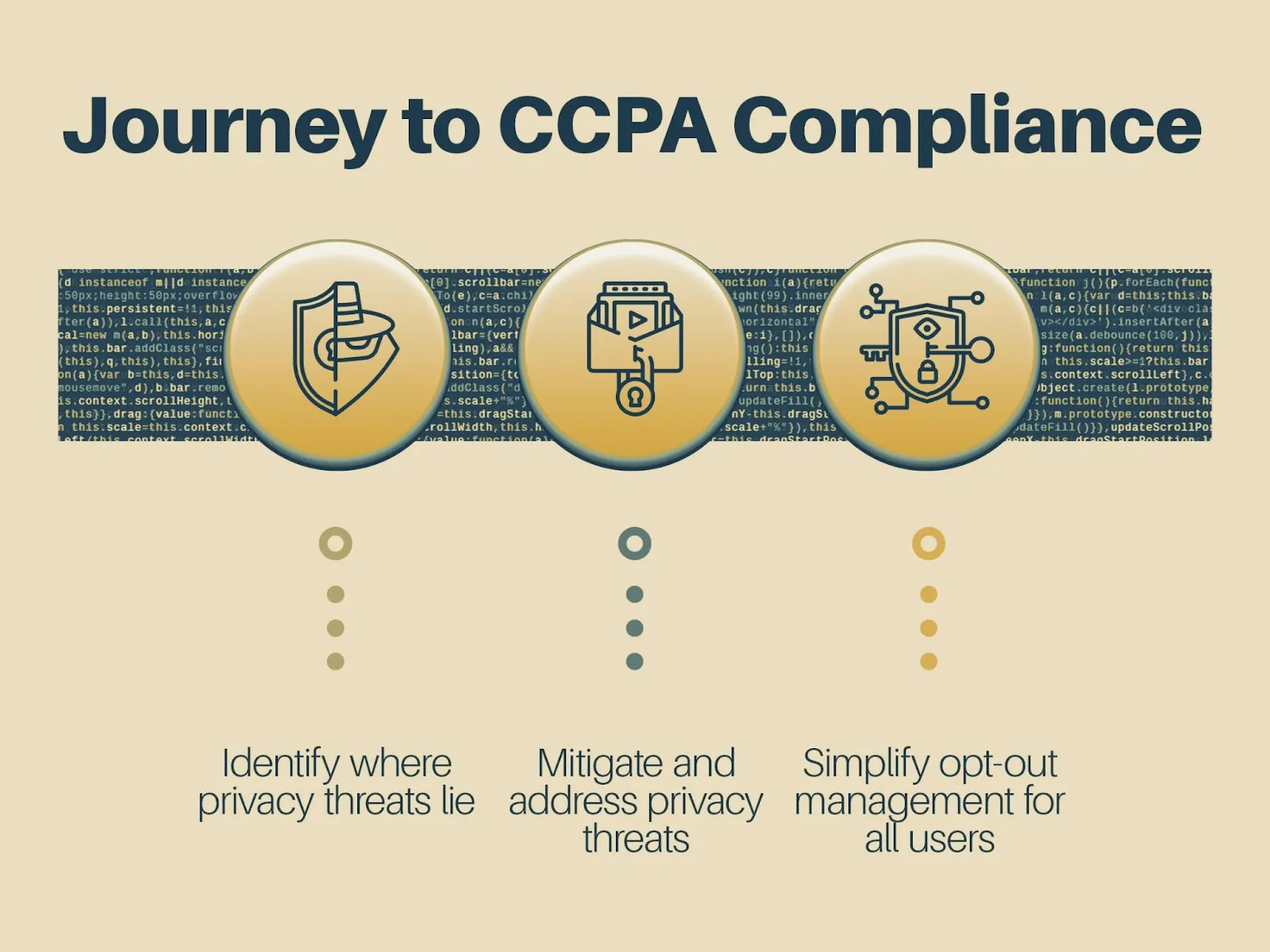
To summarize, here are essential actions every covered business should take to comply with the CCPA:
- Update Privacy Notices: Ensure your website privacy policy includes all required information (categories of personal info collected, sources, purposes, third parties, consumer rights, etc.). In a compliance review, 73.13% of companies had at least one missing required area.
- Enable Opt-Out of Sale/Sharing: Add a clear "Do Not Sell or Share My Personal Information" link on your homepage or app menu. Configure your site to respond to the Global Privacy Control (GPC) browser signal as an opt-out. Regulators have explicitly required honoring GPC, and failure to do so was cited in the famous Sephora enforcement action.
- Implement Consumer Request Workflows: Set up internal procedures for handling Data Subject Access Requests (DSARs). Be prepared to respond within 45 days (with one possible 45-day extension). Train a response team so that requests are logged and addressed consistently.
- Secure Personal Data ("Reasonable Security"): Implement reasonable security procedures to protect personal information. This is critical because CCPA allows consumers to sue if a company's negligence in protecting data leads to a breach. For example, a 2024 settlement with software provider Blackbaud required $6.75 million in penalties and security upgrades after they failed to implement measures like multi-factor authentication, which enabled hackers to steal donor records.
- Revise Third-Party Contracts: Update agreements with any contractors or partners who handle personal data. If you share data with other businesses, consider implementing contractual assurances or shifting to service provider arrangements to avoid that being deemed a "sale."
- Provide a Notice of Right to Limit Sensitive Info (if applicable): If you collect "sensitive personal information" (like SSNs, financial account info, precise geolocation, health data, etc.), you must offer a "Limit the Use of My Sensitive Personal Information" link.
- Avoid Dark Patterns: Design your consumer interfaces in good faith. Don't make it difficult for consumers to exercise rights. The California Privacy Protection Agency issued guidance in 2024 warning businesses to avoid dark patterns that subvert consumer intent.
- Document and Maintain Records: Keep records of consumer requests and how you responded for at least 24 months. Document your overall compliance efforts to demonstrate good-faith if regulators investigate.
What are CCPA Rights for Consumers?
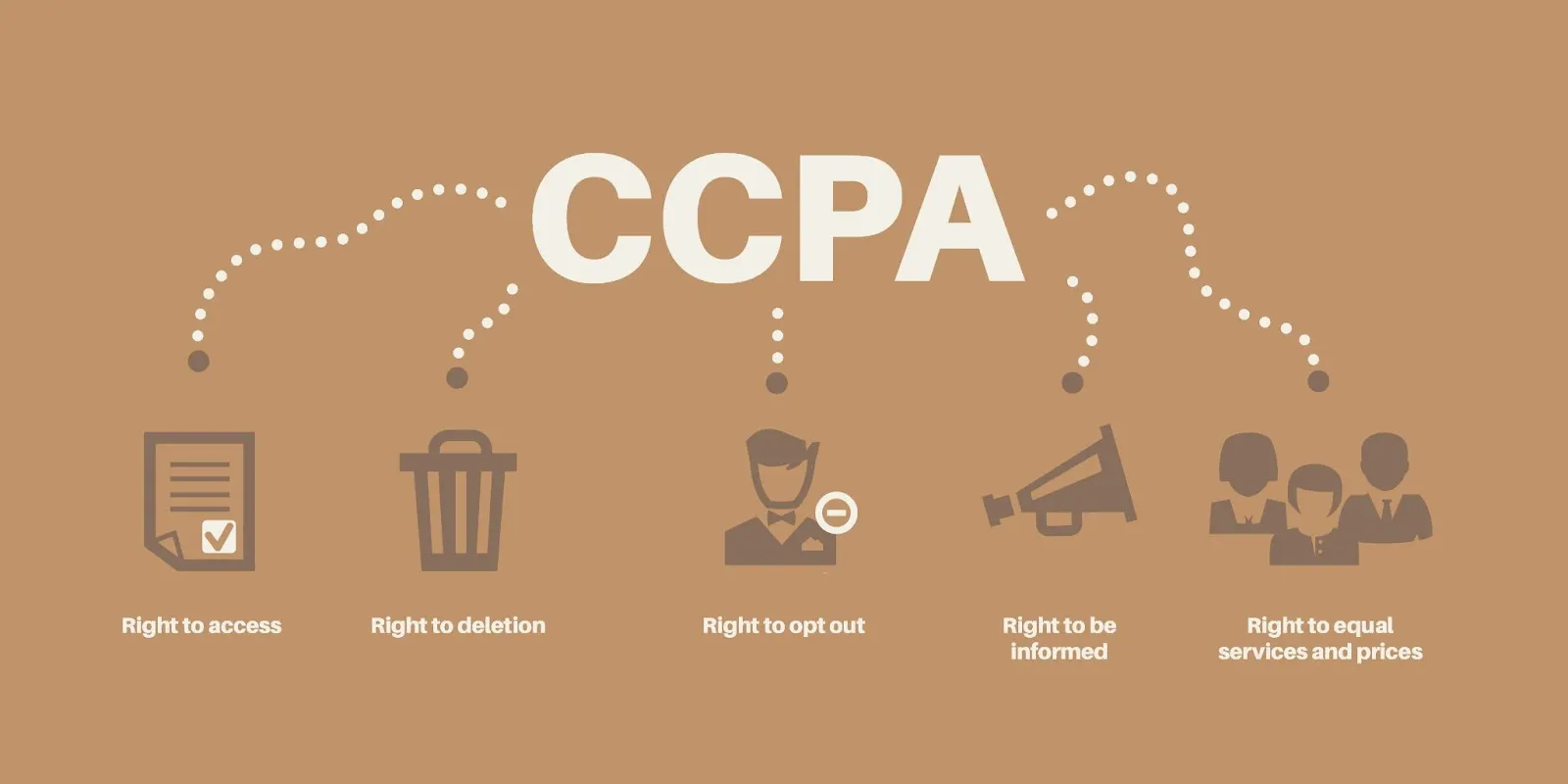
The California Consumer Privacy Act arms residents with several powerful rights over their personal information. As of the CPRA's enhancements in 2023, Californians have six main rights under the law:
- Right to Know: Consumers can request that a business disclose the personal information it has collected about them and how it's being used and shared.
- Right to Delete: Consumers can ask a business to delete their personal information. Deletion requests are the most common type of CCPA request — accounting for over 40% of all privacy requests in recent years.
- Right to Opt-Out of Sale/Sharing: Consumers have the right to direct a business not to sell their personal information to third parties or share it for targeted advertising.
- Right to Limit Use of Sensitive Personal Information: Consumers can tell a business to limit the use and disclosure of their sensitive personal information.
- Right to Correct: Consumers can request that a business correct inaccurate personal information.
- Right to Non-Discrimination: Consumers who exercise any of these CCPA rights are protected from discrimination by the business.
Managing Third-Party Data Sharing
Managing how personal data is shared with third parties is a crucial aspect of CCPA compliance. The law's focus on "selling" data and "sharing" data for behavioral ads means businesses must keep tight control and clear contracts whenever California residents' information leaves their direct possession.
Identify what data you're sharing and with whom. This includes obvious cases like selling a marketing list, but also less obvious ones like embedding a third-party analytics script on your website. Under CCPA, those latter scenarios can count as a "sale" unless the third party is a service provider under strict contract.
CCPA requires specific language if the third party is a service provider: an agreement that the provider will not sell or use the personal info for any purpose other than performing the services. The CPRA added the concept of "contractors" similarly and demands that even routine service providers provide a certification that they understand and will comply with the CCPA's restrictions.
For situations where a business does share or sell data to a third party not under a service provider contract, the business must provide a way for consumers to opt out and honor those opt-outs downstream. The AG made it clear that ignoring Global Privacy Control (GPC) is illegal — one enforcement sweep found companies failing to honor GPC and forced them to implement technology to do so.
Examples and Enforcement: The Sephora case demonstrated the importance of managing third-party sharing: the company was penalized for allowing third-party advertising and analytics companies to collect personal info via its website without proper notice or opt-out, which the AG considered a "sale". The settlement required Sephora to fix its service provider contracts and implement a mechanism to honor opt-out signals.
Consequences of Non-Compliance with CCPA
Non-compliance with the CCPA can lead to serious consequences ranging from regulatory enforcement actions and fines to private lawsuits and reputational harm. Here some potential consequences of non-compliance:
Regulatory Fines and Settlements: The California Attorney General's office and CPPA can bring enforcement actions with fines of $2,500 per violation or $7,500 per intentional violation (now adjusted to $2,663 and $7,988 in 2025). We have concrete cases: Sephora's $1.2 million settlement in 2022 for failing to disclose sale of data and honor opt-outs, and Google's $93 million settlement in 2023 for misleading location privacy practices.
Private Lawsuits (Data Breach Litigation): CCPA gives consumers a private right of action for data breaches resulting from inadequate security. This means if a company is hacked, consumers can sue for statutory damages of $107–799 per consumer per incident. These lawsuits create significant financial risk separate from regulator fines.
Reputational Damage and Loss of Business: According to Cisco's research, 94% of organizations say their customers won't buy if they don't trust the company's data protection practices. A publicized non-compliance incident can lead to considerable brand damage.
The smart business approach is to invest in compliance up front rather than pay penalties later.
How High Data Penalties Can Be?
Data breaches occupy a special place in the CCPA enforcement landscape. Under CCPA, businesses have a duty to implement "reasonable security" for personal data, and breaches can lead to both private lawsuits and potentially enforcement actions.
Statutory Damages for Breaches: The CCPA provides statutory damages of $107 to $799 per consumer, per incident for breaches of certain personal information due to inadequate security. This range allows courts to decide per-person damages; in class actions, they often lean toward the lower end if there's no large demonstrable harm, but even $100 times a million people is $100 million, so the stakes are huge.
Examples of Breach Penalties: The largest settlement examples include:
- Anthem Breach (2014, settled 2020): Settlement: $8.69M to CA plus other states, plus a $115M class action settlement.
- Equifax Breach (2017, settled 2019): Settlement: up to $425M to consumers, $175M to states.
- T-Mobile Breach (2021): Class action settlement of $350M (nationwide).
Data breach penalties under CCPA can run into the tens of millions in payouts. CCPA effectively puts a "price tag" on personal data safety — if you fail to secure consumer data in California, expect to pay for each record compromised.
Ensuring Data Protection to Avoid Penalties
To steer clear of penalties under CCPA/CPRA, businesses are focusing on robust data protection and proactive compliance measures. Here are some best practices:
Adopt a Privacy Framework and Culture: According to Cisco's research, 98% of companies now report privacy metrics to their board of directors, indicating top-down oversight. And 95% have made privacy an integral part of company culture.
Invest in Privacy Tech and Automation: Tools that scan and label personal data across the company help ensure nothing is overlooked. By finding and securing data proactively, companies prevent breaches. Some firms have even implemented "self-destruct" policies for data — automatically deleting certain personal info after X days if it's no longer needed.
Regular Training and Drills: Employees are often the weakest link in data protection. Companies are conducting regular training on CCPA and security hygiene. Some organizations run "tabletop exercises" simulating a data breach or a major CCPA compliance audit to test their incident response plans.
Third-Party Risk Management: Companies maintain a vendor privacy risk register and update it annually. They might send questionnaires to key vendors asking about their security and privacy posture, and even require proof of SOC 2 reports or ISO certifications.
Encryption and Pseudonymization: Under CCPA's private action, if data is encrypted or redacted and a breach happens, the company may avoid liability because encrypted data isn't considered "personal information" under the breach definition.
Consumer Trust and Goodwill: Ensuring data protection creates a positive differentiator. A study found that the average organization reports getting privacy benefits of 1.6 times their investment. In essence, ensuring data protection means building privacy and security into the fabric of the business. Given that 94% of executives believe customers won't buy if they don't trust data practices, avoiding penalties is just one part of the equation — doing right by consumer data ultimately drives success.
Final Thoughts: Marketing Compliance in 2025
CCPA compliance isn't going away. If anything, the regulatory landscape is getting more complex, with stricter enforcement and higher fines. But that doesn't mean your marketing efforts have to suffer.
The marketers who are thriving in this new environment aren't the ones finding clever loopholes or hoping regulators won't notice them. They're the ones who have embraced privacy as a core value and built it into their processes from the ground up.
Yes, CCPA has changed how we market. Email lists are smaller but more engaged. Data collection is more transparent. Consent is explicit rather than assumed. And quite frankly, these are all good things for the marketing profession as a whole.
At its core, CCPA pushes us to respect our customers and prospects. And when people feel respected, they're more likely to trust your brand, engage with your content, and ultimately become customers.
We created Luthor because we saw how many marketing teams were struggling with compliance. The rules are complex, the stakes are high, and most marketers aren't legal experts. Our AI-based tool automatically reviews your marketing assets for compliance issues, helping you reduce risk, effort, and time spent on manual reviews.
So instead of seeing CCPA as a burden, see it as an opportunity to build better, more trustworthy relationships with your audience. And if you need help navigating this complex landscape, we're here for you.
Want to see how Luthor can help your team stay compliant without slowing down? Request demo access today and see firsthand how our tool can streamline your compliance process.
Keep reading
Related resources

Guides
The Meaning of Compliance and an Era of Change for Banks, RIAs, and Fintechs
Learn the meaning of regulatory and corporate compliance and its impact on the operations of banks, RIAs, and fintechs.
15 min

Guides
Guide to the Regulatory Agencies in the U.S. Financial Industry
Discover the 20 major regulatory agencies that rule financial industry & learn how they impact banks, RIAs, and fintechs
18 min

Guides
What Is a Compliance Checklist? And How Can Banks, RIAs, and Fintechs Create One?
Discover what a compliance checklist is and how to create one to streamline AML/KYC and consumer protection.
7 min



Never publish risk again.
Our policy and legal engineers will walk through your content workflows and regulatory obligations, then integrate Luthor in days, not months.